
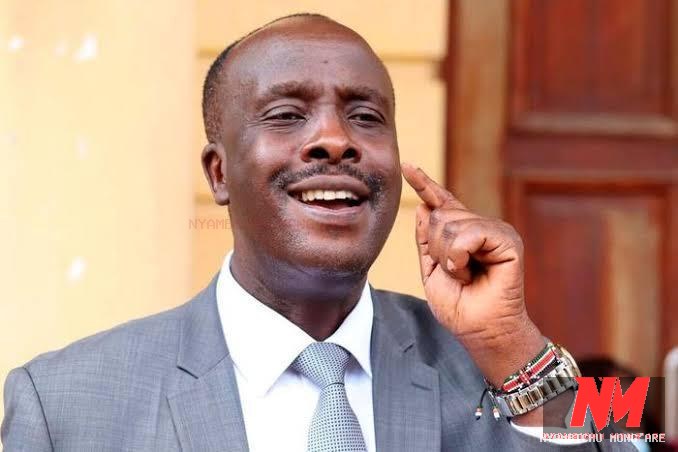
Nairobi lawyer Danstan Omari has continued to publicly question former Interior Cabinet Secretary Fred Matiang’i’s ambitions to seek the presidency, raising questions about the financial muscle required to run a nationwide political campaign.
Speaking about the realities of Kenyan politics, Omari questioned whether Matiang’i would be able to sustain the kind of financial mobilisation that he argues is often associated with political campaigns across the country.
«“Every single rally, even for MCA, people receive tokens or even bribes. Can Matiang’i dish out money? Can he bribe voters in his favour?”»
Omari’s remarks come as political activity surrounding the 2027 presidential race continues to intensify, with Matiang’i among the prominent figures whose national ambitions have attracted considerable attention.
The lawyer has also questioned whether Matiang’i has the financial resources necessary to mount a serious presidential campaign, arguing that a presidential candidate needs billions of shillings to maintain a nationwide campaign operation.
Omari has cited a figure of approximately KSh6 billion as the kind of financial resources he believes would be required for a presidential campaign. However, this figure should be understood as Omari’s estimate rather than an established statutory requirement for presidential candidates.
Historical analysis of Kenyan elections has also documented the enormous costs associated with presidential campaigns. Research citing the Coalition for Accountable Political Financing estimated that presidential candidates in the 2007 election spent close to KSh6 billion collectively, illustrating the scale of campaign expenditure in previous election cycles.
Omari’s latest questions therefore centre on a broader issue: where would the money required for a nationwide presidential campaign come from, and does Matiang’i have the financial capacity to sustain such an operation?
The lawyer has previously argued that presidential politics requires mobilisation beyond a candidate’s home region. In recent remarks, he challenged Matiang’i and other Gusii presidential hopefuls to demonstrate their ability to attract significant support outside the Kisii region.
Omari has further argued that winning the presidency requires a national coalition and broad voter support rather than relying solely on regional backing. Kenya’s Constitution requires a presidential candidate to receive more than half of all votes cast nationally and at least 25 percent of the votes cast in more than half of the counties.
The latest comments add another dimension to the ongoing debate over Matiang’i’s presidential ambitions — not only whether he can build a national political coalition, but also whether he can finance the extensive nationwide campaign that such an undertaking would require.
For now, there is no publicly established figure showing exactly how much money Matiang’i has available for a potential presidential campaign. His actual campaign financing would depend on declared sources of funds, contributions, party support and other lawful financing mechanisms as the electoral process progresses.
Omari, who previously represented Matiang’i as his lawyer, has made it clear that his current political assessment of the former CS has changed. He has recently urged Matiang’i to reconsider his presidential ambitions and instead support President William Ruto.
The questions raised by Omari are likely to remain part of the wider conversation as presidential hopefuls seek to demonstrate not only their political support, but also their ability to organise and finance campaigns across the country.
Follow Nyambichu Mong'are for more updates.
