
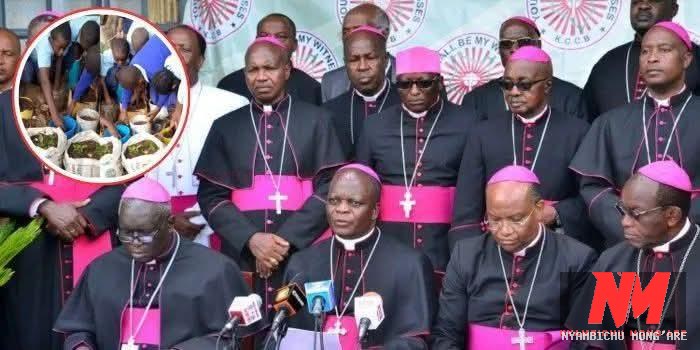
Buana, sometimes we need to ask uncomfortable questions.
What exactly is the connection between a church sponsor and the day to day administration of a public school?
A teacher is posted by the employer to teach. A headteacher is appointed to administer the institution. These are educators, not parish priests.
So why does a church sponsoring a public school sometimes appear to have an interest in deciding who occupies the administrator's office?
Kwani when TSC posts a principal, does the principal report to TSC on Monday and to the parish priest on Sunday?
Let us be clear. The law does recognise sponsors.
Under the Basic Education Act, a sponsor can participate in reviewing curriculum materials, sit on the Board of Management, support spiritual development and provide financial or infrastructural support.
And there is an important detail many people conveniently forget.
Where a faith based organisation sponsors a public school, the County Education Board consults the sponsor when appointing the chairperson of the Board of Management. But the law also says a faith based sponsor that does not make a significant contribution and impact should not be consulted on that appointment.
That is very different from becoming the shadow employer of teachers.
The sponsor does not employ teachers.
The sponsor does not set the teachers' professional terms.
The sponsor should not turn spiritual sponsorship into a licence to interfere with professional administration.
And this is where the conversation becomes uncomfortable, especially in some parts of Gusii land.
Some sponsors have acquired an influence in schools that, in practice, appears much bigger than the statutory role of sponsorship.
The question is simple:
What exactly would stop a government school from teaching, feeding, sitting examinations and producing excellent students if the church sponsor disappeared tomorrow?
Would the classrooms collapse?
Would KCSE papers refuse to arrive?
Would TSC withdraw the teachers?
Would textbooks develop legs and walk away?
Would students suddenly forget mathematics because the church signboard was removed?
Of course not.
Schools existed because of communities, government investment, teachers, parents and learners. Sponsors can add value, especially through spiritual, infrastructural and financial support. But sponsorship should not become ownership of the institution.
There is also something deeply uncomfortable when a religious institution begins treating the appointment of a professional administrator as though it were appointing a parish committee.
A headteacher should be judged by professional competence, integrity, performance and the requirements of the employer.
Not by whether somebody at the sponsor's office likes his or her face.
Not by whether the administrator attends the preferred church.
Not by whether the headteacher is sufficiently obedient to religious power brokers.
And certainly not by whether a pastor can make one phone call and suddenly someone's deployment becomes a matter of spiritual warfare.
Let the church preach.
Let the church provide spiritual nourishment.
Let the church support needy learners.
Let the church build classrooms, laboratories, dormitories and other facilities.
Let the church participate in the governance structures provided by law.
But please, leave professional management to professional structures.
A public school belongs to the public.
Its teachers are professionals.
Its administrators are professionals.
Its employer is the government.
The Board of Management has defined responsibilities.
And the sponsor has defined responsibilities too. The law itself requires the sponsor to support education while safeguarding the religious adherence of others.
The danger begins when sponsorship quietly changes into control.
That is where Government needs to draw the line.
If a sponsor is genuinely contributing money, infrastructure, spiritual programmes and other meaningful support, the school should recognise and appreciate that contribution.
But if sponsorship becomes a mechanism for determining who gets transferred, who becomes principal, who remains in office and who must be removed, then we have moved from sponsorship to something else.
And that something else deserves serious public scrutiny.
Because a church may own the cross on the wall.
But it does not own the teacher.
It does not own TSC.
And it certainly should not own the professional destiny of a headteacher.
The church should sponsor education, not commandeer it.
Article credit; Militia Edward on Facebook
